 EN
EN FR
FRCarbon footprint and decarbonization plan for an industrial site
An industrial SME under decarbonization pressure from its main customer, with no carbon data of its own. Seven weeks to rebuild the site's footprint from operational records, quantify it under the ADEME framework and deliver a prioritized reduction plan.
The brief
A plastics manufacturer with 140 employees, €14.4M in revenue, 35 injection presses and two production sites receives a firm requirement from its long-standing customer: measure its carbon footprint and commit to a reduction plan, as part of a program aiming to halve supply chain emissions by 2025. The company holds no carbon data whatsoever. The industrial director commissions a study on the main site: produce the scope 1 and 2 assessment under the ADEME framework, then propose an action plan targeting 15% fewer emissions and 30% less electricity.
I led the engagement as project manager: a team of 4, 762 hours, seven weeks on site, a continuous improvement sponsor on the business side and an executive committee stakeholder as client. KPI tracking, schedule and budget on the management side; risk analysis, process design and on-site collection spread across the team. DMAIC provided the backbone, from framing the problem to formal acceptance of the deliverables.
Rebuilding data that did not exist
The real work is upstream of the calculation. Not a single emission item was instrumented: every line of the assessment had to be rebuilt from invoices and contracts, MRP extracts, expert reports and manual readings taken on the shop floor, then converted into consumed units before being matched against emission factors from the ADEME Base Carbone® database.
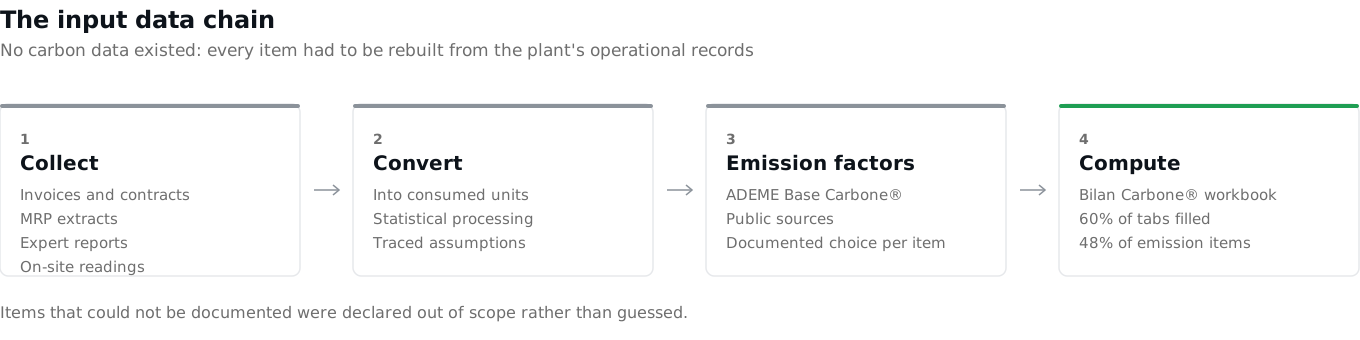
One rule held throughout: an item that cannot be documented is declared out of scope, never estimated by feel. That is what makes the result defensible in front of the customer, and it is also what honestly caps coverage at 60% of the Bilan Carbone® tabs and 48% of emission items.
The requested perimeter was not the problem
The collected data made it possible to go beyond the brief and also quantify raw materials, packaging and commuting. That overshoot is where the study’s value sits.
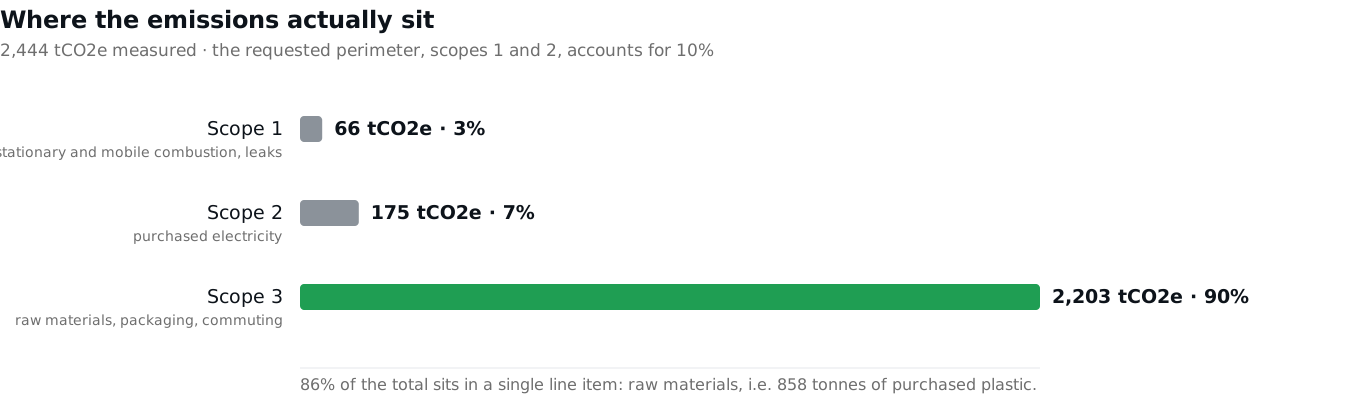
The requested scopes 1 and 2 amount to 241 tCO2e, 10% of the site’s actual footprint. The remaining 90% sits upstream, and 86% of the total comes from a single line item: 858 tonnes of purchased plastic. The conclusion handed to the executive committee: this company’s decarbonization path does not run through its workshops but through the material it buys and the way parts are designed with its customers.
A quantified plan, not a list of intentions
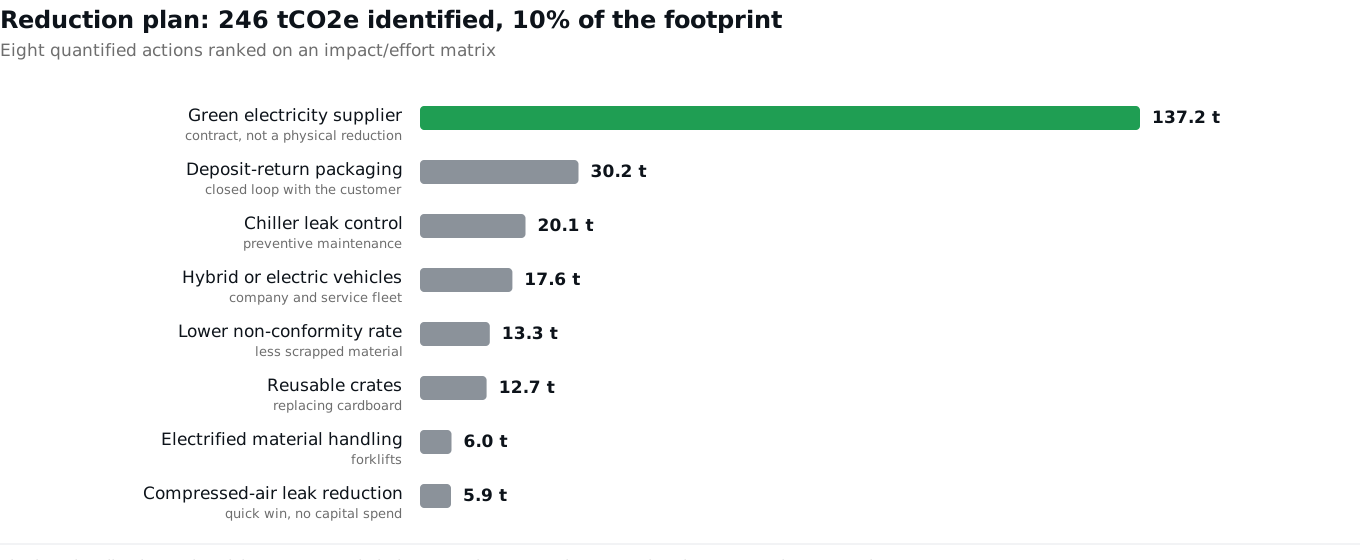
Every action is valued in avoided tCO2e, then placed on an impact/effort matrix, which separates zero-capex quick wins such as hunting compressed air leaks from major actions requiring an investment decision. The identified total reaches 246 tCO2e, 10% of the assessment: short of the 15% target, and the gap was presented as such rather than closed with convenient assumptions. The heaviest line in the plan, switching to a green electricity supplier, shifts carbon accounting more than it cuts physical consumption, and the report says so explicitly.
Leaving the company self-sufficient
Closing the engagement was not handing over a PDF. It covered transferring the method: a governance structure for the carbon assessment, tracking indicators, author and verifier traceability, and activity data recorded in the format ADEME expects. The goal was for the exercise to be repeatable in house the following year, without the team that ran it.